
-
February 9, 2026
- 0 Comment
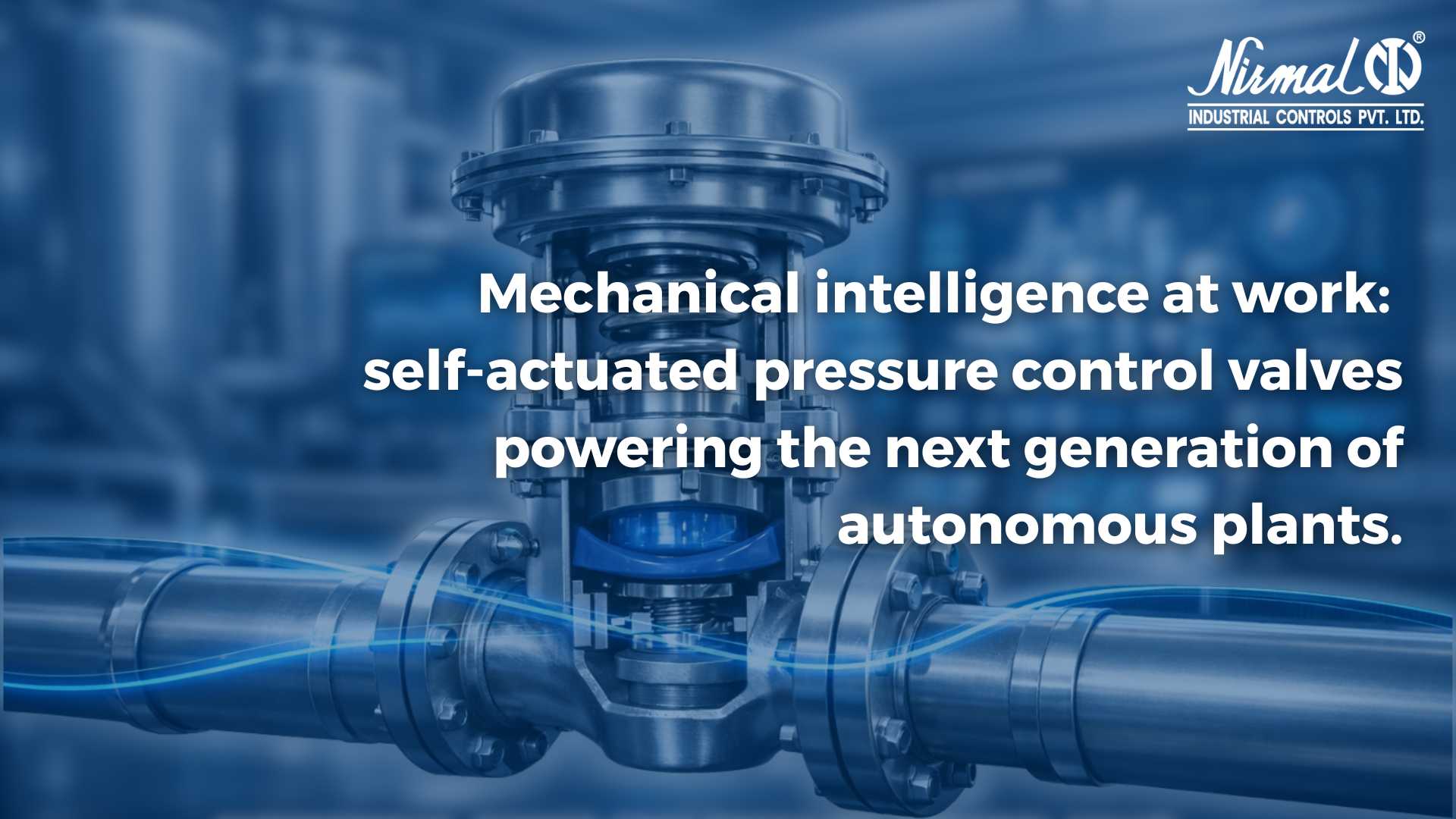
How Self-Actuated Pressure Control Valves Are Shaping the Future of Autonomous Plants
Autonomous plants are designed to run safely and efficiently with minimal human intervention. To achieve this, they rely on equipment that is dependable, self-sufficient, and capable of maintaining stable process conditions without constant monitoring. One such critical component is the self-actuated pressure control valve.
These valves play a key role in ensuring pressure stability while reducing system complexity, making them a fundamental element in modern autonomous plant design.
Understanding Self-Actuated Pressure Control Valves
Self-actuated pressure control valves are mechanical pressure-regulating devices that operate using the energy of the process fluid itself. Unlike conventional control valves, they do not require electricity, instrument air, transmitters, or external controllers.
Because pressure sensing and control happen internally, these valves are highly reliable and suitable for remote or unmanned plant operations.
How Self-Actuated Valves Work
The operating principle of a self-actuated pressure control valve is based on force balance. Process pressure acts on a sensing element such as a diaphragm or piston, while a spring provides an opposing force set to the desired pressure value.
When the pressure deviates from the set point:
- The sensing element moves
- The valve modulates its opening
- Pressure is automatically stabilized
This internal control action is fast, direct, and stable, even during sudden pressure fluctuations.
Why Autonomous Plants Rely on Self-Actuated Valves
Autonomous plants prioritize reliability and independence over complex control systems. Self-actuated pressure control valves support this philosophy by operating completely on their own.
Their main advantages include:
- No dependency on external power or control signals
- Continuous pressure regulation during power failures
- Predictable and stable performance over long periods
These features make them ideal for plants where human intervention is limited.
Contribution to Safety and Plant Reliability
Pressure is one of the most critical parameters in any process plant. Self-actuated pressure control valves provide built-in pressure protection by responding immediately to changes in system pressure.
They often act as the first layer of defense against overpressure, reducing stress on downstream equipment and complementing safety relief systems. Their mechanical operation eliminates risks associated with software failure or signal loss.
Cost and Maintenance Advantages
From a lifecycle perspective, self-actuated valves help reduce operating costs by:
- Eliminating power and air consumption
- Reducing installation complexity
- Minimizing maintenance requirements
With fewer components and no electronic parts, these valves offer long service life and lower total cost of ownership.
Key Industrial Applications
Self-actuated pressure control valves are widely used in industries where safety and reliability are critical, including:
- Gas pressure reducing stations
- Hydrogen generation and storage systems
- Tank blanketing and vapor control
- Chemical and process plants
Their ability to operate safely in hazardous and remote locations makes them a preferred choice for autonomous systems.
The Role of Mechanical Intelligence in Autonomous Plants
As plants become more digital, mechanical systems continue to play a vital role. Self-actuated pressure control valves represent mechanical intelligence, capable of sensing and acting without external inputs.
In future autonomous plants, these valves will work alongside digital monitoring systems, providing local, reliable control while data is analyzed remotely.
Self-actuated pressure control valves are shaping the future of autonomous plants by delivering power-free, reliable, and efficient pressure regulation. Their simplicity, safety, and independence make them essential components in building resilient, low-maintenance, and truly autonomous industrial facilities.